
Throne Travel
A full service travel agency
(563) 323-0889
A full service travel agency
(563) 323-0889

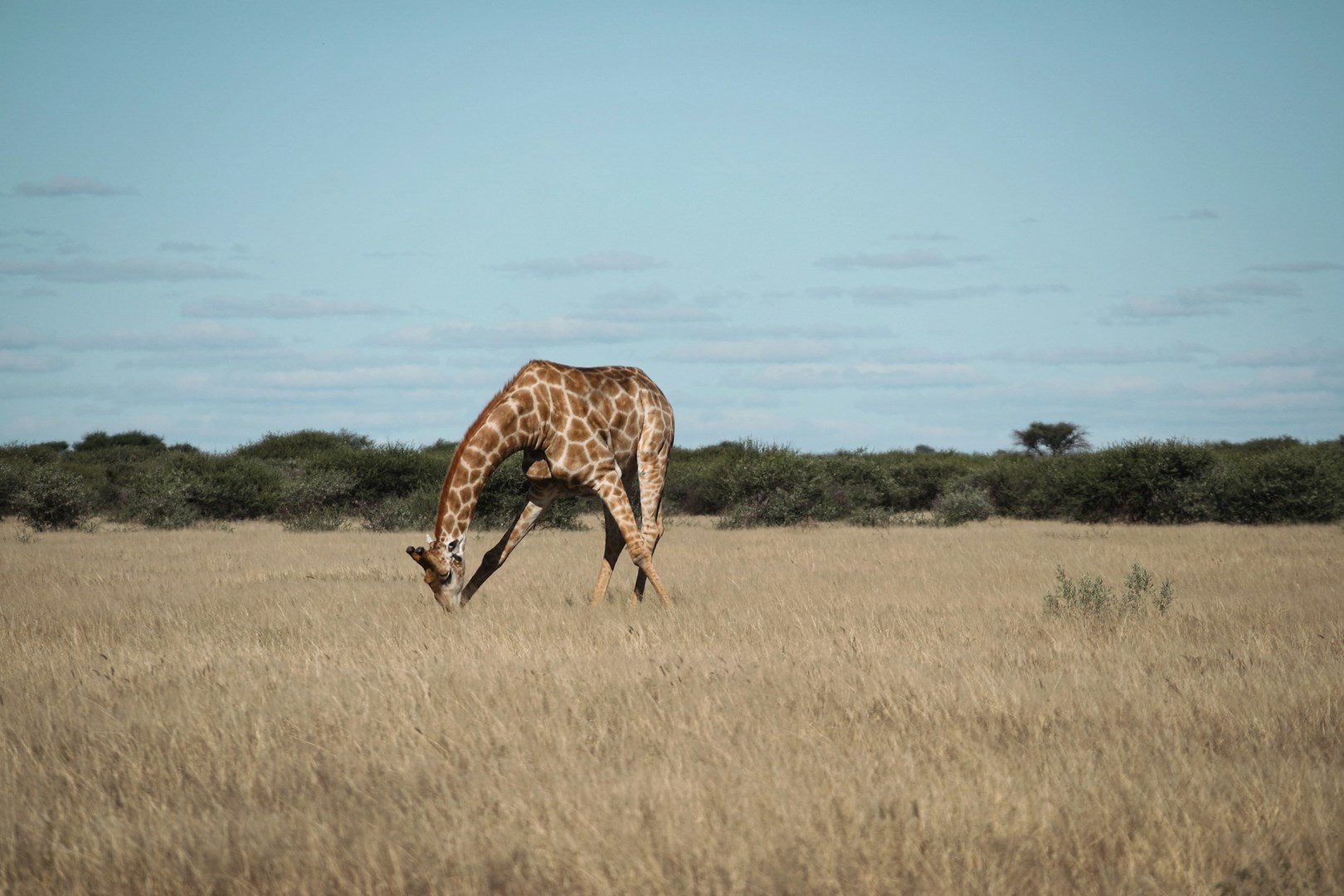
The Central Kalahari Game Reserve is a vast protected wilderness in Botswana’s Kalahari Desert, rather than South Africa. It covers a large area of semi-arid grassland, scrub, dry river valleys, and sandy plains, with Deception Valley and the northern section around Passarge Valley among its best-known areas. The reserve is remote and sparsely developed, with wildlife viewing focused on natural water sources and seasonal changes in vegetation. Its open landscapes support a wide range of desert-adapted animals and provide a setting that differs markedly from the wetter savanna reserves found elsewhere in southern Africa.
The reserve has strong cultural connections with the San peoples, including communities whose traditional knowledge is closely associated with the Kalahari environment. San hunter-gatherers developed detailed knowledge of local plants, animals, water sources, and seasonal conditions, allowing communities to live in an environment with limited permanent water. Their cultural relationship with the land remains an important part of the wider Kalahari story. Nearby settlements and cultural experiences provide opportunities to learn about traditional knowledge, languages, crafts, and ways of living associated with the region.
Wildlife is well adapted to the reserve’s dry conditions. Visitors may encounter Kalahari lions, cheetahs, leopards, brown hyenas, African wild dogs, gemsbok, springbok, wildebeest, and giraffes, while smaller species include bat-eared foxes, meerkats, and aardwolves. The landscape changes considerably with the seasons, particularly after rainfall when grasses and other vegetation become more abundant. Deception Valley is one of the better-known wildlife areas, while Piper’s Pan is recognized for its open plains and seasonal concentrations of animals. Birdlife is also diverse, with species including kori bustards and secretarybirds.
The Central Kalahari’s food traditions are linked to the plants and animals of a demanding desert environment. Indigenous knowledge includes the identification and use of edible roots, fruits, seeds, and other wild foods, as well as methods for locating scarce water. Today, safari camps generally provide meals using a mixture of local and international ingredients rather than relying on wild foods. One distinctive feature of the reserve is its extremely low population density and limited infrastructure, which help preserve large areas of uninterrupted habitat. Its wildlife, seasonal landscapes, and San cultural connections make the Central Kalahari an important part of Botswana’s natural and cultural heritage.